
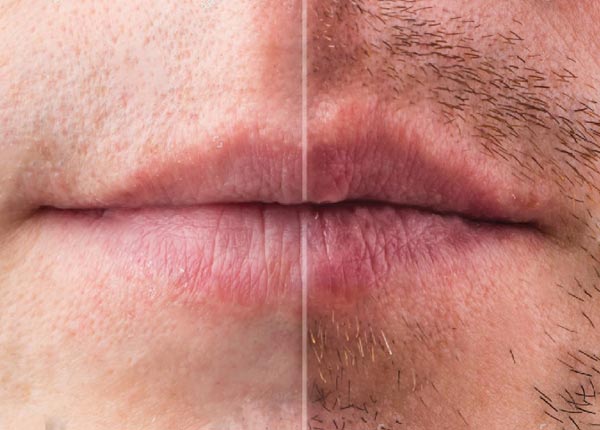
Around 20 beard styles or beard designs exist for men, with countless variations. Whether it’s a 3-day stubble, a mustache, or a full beard: a beard is a statement and even today represents masculinity like nothing else. If a beard becomes thinner or if one is not naturally blessed with dense beard growth, a beard hair transplant can naturally help.
Contents of this page:
 The transplanted hairs create a natural 3-day beard. This beard style never goes out of fashion.
By the way: In the database of The Hair Alliance, you can find independently verified providers for a beard hair transplant according to high standards. You can recognize these professional and reputable providers by a provider check seal, certification, and inspection grade. In the database of certified providers by The Hair Alliance, you will find the suitable provider for successful treatment of sparse beard growth or hair loss.
The transplanted hairs create a natural 3-day beard. This beard style never goes out of fashion.
By the way: In the database of The Hair Alliance, you can find independently verified providers for a beard hair transplant according to high standards. You can recognize these professional and reputable providers by a provider check seal, certification, and inspection grade. In the database of certified providers by The Hair Alliance, you will find the suitable provider for successful treatment of sparse beard growth or hair loss.
 Head hairs most closely resemble the original beard hairs. The transplanted hairs are inserted in the beard to create a harmonious overall appearance.
- Reasons to Consider a Beard Hair Transplant
- Beard Hair Transplantation with the Follicular Unit Extraction Method
 The transplanted hairs create a natural 3-day beard. This beard style never goes out of fashion.
By the way: In the database of The Hair Alliance, you can find independently verified providers for a beard hair transplant according to high standards. You can recognize these professional and reputable providers by a provider check seal, certification, and inspection grade. In the database of certified providers by The Hair Alliance, you will find the suitable provider for successful treatment of sparse beard growth or hair loss.
The transplanted hairs create a natural 3-day beard. This beard style never goes out of fashion.
By the way: In the database of The Hair Alliance, you can find independently verified providers for a beard hair transplant according to high standards. You can recognize these professional and reputable providers by a provider check seal, certification, and inspection grade. In the database of certified providers by The Hair Alliance, you will find the suitable provider for successful treatment of sparse beard growth or hair loss.
Reasons to Consider a Beard Hair Transplant
The Perfect Beard: A Sign of Masculinity and Individuality
A beard frames a man’s face and is a central part of his self-presentation. Although much more is possible with men’s hairstyles today than twenty years ago, many men prefer a classic look for the hair on their head while expressing their personality with an individual beard. The widespread 3-day beard is no less demanding to maintain than the mustache or the full beard. How densely a man’s beard grows can depend on several factors. Genetic predisposition plays a role just like life circumstances. Poor nutrition and excessive stress can cause not only thinning of head hair: gaps can also form in the beard, which quickly becomes visible when losing more than 100 hairs a day. Such a beard quickly looks unkempt, with the alternatives being no beard or a natural beard hair transplant.Why Men Nowadays Opt for Beard Hair Transplants
A beard consists of 7,000 to 15,000 hairs, with the length, density, and number depending on various factors. The head hairs most closely resemble the original beard hairs in terms of structure and density, although hair loss on the head and beard hair loss do not necessarily have to be related. Not every man has even beard growth, and hormonal causes can be responsible for early loss of beard hairs. For example, when not enough testosterone or no longer enough testosterone is converted to dihydrotestosterone, which stimulates beard growth. Men long tolerated these natural processes. But thanks to technical innovations and reputable providers for beard hair transplants, it’s no longer an issue to assist beard growth with a natural hair transplant. Head hairs most closely resemble the original beard hairs. The transplanted hairs are inserted in the beard to create a harmonious overall appearance.